
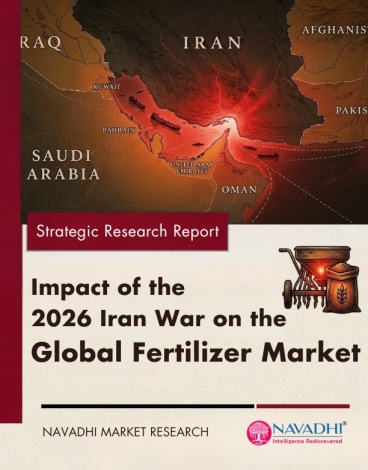

The 2026 Iran War has triggered the most acute fertilizer supply crisis in modern history - one that is structurally broader, geographically deeper, and agronomically more dangerous than the 2022 Russia-Ukraine shock. Unlike 2022, which primarily disrupted natural gas-linked nitrogen prices, the 2026 crisis is simultaneously a physical supply blockage, a feedstock disruption, and a logistics collapse occurring at the precise moment of maximum seasonal vulnerability: the Northern Hemisphere spring planting window.
As of Day 19 (March 18, 2026), the following market realities are confirmed: Urea at the NOLA hub has surged from USD 516/MT (February 27) to over USD 683/MT (March 5) and continues to escalate. At least 21 ships carrying approximately 1 million metric tonnes of fertilizer are physically stranded in the Persian Gulf. QatarEnergy - operator of the world's single largest urea facility (QAFCO) - has declared force majeure. Iran's ~350,000–400,000 MT/month urea production is functionally offline. China has announced it will not export urea until August 2026, removing a further 10–15% of global export supply. Oxford Economics has raised its Q2 2026 fertilizer price forecast by 20% with risks 'skewed to the upside.'
This report provides a comprehensive real-time intelligence assessment of the conflict's impact on the global fertilizer industry. It covers: the Strait of Hormuz supply chain cascade; product-by-product price and supply analysis; regional breadbasket vulnerability for India, Brazil, the United States, Sub-Saharan Africa, Southeast Asia, Australia, and South Korea; a PESTLE and SWOT analysis of Iran as a fertilizer market participant; and detailed company-level SWOT and revenue impact analyses for 11 key fertilizer industry players. The report also covers critical new developments since Day 13 of the conflict, including the assassination of Iran's Supreme National Security Council head Ali Larijani on March 17, drone strikes on UAE Jebel Ali port and Fujairah industrial zone, and the emergence of 'nitrogen nationalism' as a structural policy response.
This research report is ideal for people who wish to gain a thorough understanding of the fertilizers market. Some of intended user for this report are:
*If Applicable.

NAVADHI is a market research company that helps global firms differentiate themselves, break market entry barriers, track their investments, develop business strategies and plan for future by providing actionable market research intelligence that helps them succeed.