
NAVADHI Market Research
Published on NAVADHI Market Research (https://www.navadhi.com)

Home > Global GLP-1 Drug Market Strategic Research Report 2026-2031

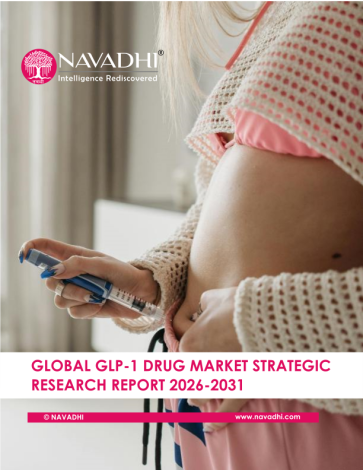
Global GLP-1 Drug Market Strategic Research Report 2026-2031

Global GLP-1 Drug Market Strategic Research Report 2026-2031
Publication ID: 
NAV0826011
Publication Date: 
August 22, 2026
Pages: 
244
Countries: 
Global [1]
Please choose the suitable license type from above. More details are at given under tab "Report License Types" below.

The global GLP-1 drug market continues its rapid expansion through the 2025–2031 forecast window, with growth increasingly driven by indication expansion beyond core metabolic disease, oral formulation development widening the addressable patient population, and manufacturing capacity expansion resolving the structural supply constraints that defined the 2022–2024 launch phase.

The competitive landscape remains concentrated around the two incumbent leaders, with a well-capitalised second wave of pipeline and biosimilar entrants -- spanning established pharmaceutical majors and specialty biologics manufacturers -- positioning for share through the forecast horizon as indication expansion and formulation innovation reshape the competitive set.

This report provides full market sizing and forecasting, segmentation by drug type and application, regional and country-level forecasts across all five major regions, verified company profiles for the leading and emerging players, competitive landscape analysis, Porter's Five Forces, PESTLE, and SWOT analysis, and forward-looking strategic implications through 2031.

Scope of Global GLP-1 Drug Market Strategic Research Report

  • This report provides forecast data by value (in USD billion) for the global GLP-1 drug market, with 2025 as the base year and 2022–2024 as the historical period, forecasting to 2031.
  • This report provides segment by type (Tirzepatide (Mounjaro/Zepbound), Semaglutide Injectable (Ozempic/Wegovy), Oral Semaglutide (Rybelsus), GLP-1 Biosimilars and Emerging Pipeline, Dulaglutide (Trulicity)) forecast data by value for the global GLP-1 drug market.
  • This report provides application segments (Type 2 Diabetes, Obesity and Weight Management, Cardiovascular Risk Reduction, Chronic Kidney Disease, Other Emerging Applications) forecast data by value for the global GLP-1 drug market.
  • This report provides region-wise (North America, Europe, Asia Pacific, Latin America, MEA) forecast data by value for the global GLP-1 drug market.
  • This report also provides country-wise forecast data for the major markets across all five regions.
  • This report identifies key growth drivers and inhibitors (pain points) affecting the global GLP-1 drug market.
  • This report provides company profiles including Company Overview, Key Products & Segments, Financial Performance, Business Strategy, and Strategic Implications, along with competitive landscape for 244-page-detailed, verified companies in the global GLP-1 drug market.
  • This report provides Porter's Five Forces analysis for the global GLP-1 drug market.
  • This report provides PESTLE (Political, Economic, Social, Technological, Legal and Environmental) analysis for the global GLP-1 drug market.
  • This report provides SWOT (Strengths, Weaknesses, Opportunities and Threats) analysis for the global GLP-1 drug market.
  • This report identifies key future trends in the global GLP-1 drug market.

Segment by Type in Global GLP-1 Drug Market Strategic Research Report

  • Tirzepatide (Mounjaro/Zepbound)
  • Semaglutide Injectable (Ozempic/Wegovy)
  • Oral Semaglutide (Rybelsus)
  • GLP-1 Biosimilars and Emerging Pipeline
  • Dulaglutide (Trulicity)

Segment by Application in Global GLP-1 Drug Market Strategic Research Report

  • Type 2 Diabetes
  • Obesity and Weight Management
  • Cardiovascular Risk Reduction
  • Chronic Kidney Disease
  • Other Emerging Applications

Segment by Region in Global GLP-1 Drug Market Strategic Research Report

  • North America
    • United States
    • Canada
  • Europe
    • Germany
    • United Kingdom
    • France
    • Italy
    • Spain
    • Rest of Europe
  • Asia Pacific
    • Japan
    • China
    • South Korea
    • India
    • Australia
    • Rest of Asia Pacific
  • Latin America
    • Brazil
    • Mexico
    • Argentina
    • Colombia
    • Rest of Latin America
  • MEA
    • Saudi Arabia
    • United Arab Emirates
    • South Africa
    • Turkey
    • Rest of MEA

Who can use the Global GLP-1 Drug Market Strategic Research Report?

This research report is ideal for people who wish to gain a thorough understanding of the global GLP-1 drug market. Some of the intended users for this report are:

  • C-level executives and Company Directors in pharmaceutical, biotechnology, and healthcare companies
  • Industry consultants and Management consultants
  • Marketing professionals and Business development professionals
  • Investment managers, Financial professionals, and Venture Capitalists
  • Bank Managers, M&A Managers, and Auditors
  • Payers, Healthcare Policy Analysts, and Market Access professionals
  • Portfolio Managers and Equity Research Analysts covering pharmaceuticals
  • Anyone operating in the GLP-1 drug value chain, from R&D through commercialization
  1. Executive Summary
    1. 1.1 Market Positioning Statement
    2. 1.2 Market Sizing and Forecast Overview
    3. 1.3 The Competitive Landscape: A Leadership Reversal in Real Time
    4. 1.4 Market Segmentation Overview
    5. 1.5 Primary Growth Drivers and Inhibitors
    6. 1.6 Strategic Implications
  2. Industry Overview & Forecast
    1. 2.1 Market Scale and Historical Trajectory
    2. 2.2 Forecast Structure and Growth Rate Assumptions
    3. 2.3 Market Segmentation by Product Type
    4. 2.4 Market Segmentation by Application
    5. 2.5 Regional Market Dynamics
    6. 2.6 Transition from Early-Launch to Maturity Phase
  3. Market Segmentation by Type
    1. 3.1 Overview and Segment Architecture
    2. 3.2 Tirzepatide (Mounjaro/Zepbound)
    3. 3.3 Semaglutide Injectable (Ozempic/Wegovy)
    4. 3.4 Oral Semaglutide (Rybelsus)
    5. 3.5 GLP-1 Biosimilars and Emerging Pipeline
    6. 3.6 Dulaglutide (Trulicity) — Legacy Segment in Structural Decline
    7. 3.7 Segment Synthesis and Competitive Positioning
  4. Market Segmentation by Application
    1. 4.1 Application Landscape Overview
    2. 4.2 Type 2 Diabetes
    3. 4.3 Obesity and Weight Management
    4. 4.4 Cardiovascular Risk Reduction
    5. 4.5 Chronic Kidney Disease
    6. 4.6 Other Emerging Applications
    7. 4.7 Application Segmentation
  5. Regional Market Forecast
    1. 5.1 North America
    2. 5.2 Europe
    3. 5.3 Asia Pacific
    4. 5.4 Latin America
    5. 5.5 MEA
  6. Country-Level Market Forecast
    1. 6.1 North America
    2. 6.1.1 United States
    3. 6.1.2 Canada
    4. 6.2 Europe
    5. 6.2.1 Germany
    6. 6.2.2 United Kingdom
    7. 6.2.3 France
    8. 6.2.4 Italy
    9. 6.2.5 Spain
    10. 6.2.6 Rest of Europe
    11. 6.3 Asia Pacific
    12. 6.3.1 Japan
    13. 6.3.2 China
    14. 6.3.3 South Korea
    15. 6.3.4 India
    16. 6.3.5 Australia
    17. 6.3.6 Rest of Asia Pacific
    18. 6.4 Latin America
    19. 6.4.1 Brazil
    20. 6.4.2 Mexico
    21. 6.4.3 Argentina
    22. 6.4.4 Colombia
    23. 6.4.5 Rest of Latin America
    24. 6.5 MEA
    25. 6.5.1 Saudi Arabia
    26. 6.5.2 United Arab Emirates
    27. 6.5.3 South Africa
    28. 6.5.4 Turkey
    29. 6.5.5 Rest of MEA
  7. Growth Drivers & Inhibitors
    1. 7.1 Overview
    2. 7.2 Primary Growth Drivers
    3. 7.2.1 Accelerating Indication Expansion Beyond Core Metabolic Disease
    4. 7.2.2 Oral Formulation Development Structurally Expanding the Addressable Patient Population
    5. 7.2.3 Manufacturing Capacity Expansion Resolving Structural Supply Constraints
    6. 7.3 Primary Market Inhibitors
    7. 7.3.1 US Government Pricing Interventions Compressing Per-Unit Revenue
    8. 7.3.2 Medicare Part D Negotiated Pricing Introducing Sustained Structural Pricing Pressure
    9. 7.3.3 Compounded and Unauthorised GLP-1 Products Eroding Cash-Pay Revenue
    10. 7.3.4 Biosimilar and Generic Entry Compressing Average Selling Prices Across the Category
    11. 7.4 Net Assessment
  8. Key Company Profiles
    1. 8.1 Eli Lilly and Company
    2. 8.1.1 Company Overview
    3. 8.1.2 Key Products & Segments
    4. 8.1.3 Financial Performance (2023–2025)
    5. 8.1.4 Business Strategy
    6. 8.1.5 SWOT Analysis
    7. 8.1.6 Strategic Implications (2025–2031)
    8. 8.2 Novo Nordisk A/S
    9. 8.2.1 Company Overview
    10. 8.2.2 Key Products & Segments
    11. 8.2.3 Financial Performance (2023–2025)
    12. 8.2.4 Business Strategy
    13. 8.2.5 SWOT Analysis
    14. 8.2.6 Strategic Implications (2025–2031)
    15. 8.3 Biocon Biologics Limited
    16. 8.3.1 Company Overview
    17. 8.3.2 Key Products & Segments
    18. 8.3.3 Financial Performance (2023–2025)
    19. 8.3.4 Business Strategy
    20. 8.3.5 SWOT Analysis
    21. 8.3.6 Strategic Implications (2025–2031)
    22. 8.4 Amgen Inc.
    23. 8.4.1 Company Overview
    24. 8.4.2 Key Products & Segments
    25. 8.4.3 Financial Performance (2023–2025)
    26. 8.4.4 Business Strategy
    27. 8.4.5 SWOT Analysis
    28. 8.4.6 Strategic Implications (2025–2031)
    29. 8.5 Viking Therapeutics
    30. 8.5.1 Company Overview
    31. 8.5.2 Key Products & Segments
    32. 8.5.3 Financial Performance (2023–2025)
    33. 8.5.4 Business Strategy
    34. 8.5.5 SWOT Analysis
    35. 8.5.6 Strategic Implications (2025–2031)
    36. 8.6 Zealand Pharma A/S
    37. 8.6.1 Company Overview
    38. 8.6.2 Key Products & Segments
    39. 8.6.3 Financial Performance (2023–2025)
    40. 8.6.4 Business Strategy
    41. 8.6.5 SWOT Analysis
    42. 8.6.6 Strategic Implications (2025–2031)
    43. 8.7 Hanmi Pharmaceutical Co.
    44. 8.7.1 Company Overview
    45. 8.7.2 Key Products & Segments
    46. 8.7.3 Financial Performance (2023–2025)
    47. 8.7.4 Business Strategy
    48. 8.7.5 SWOT Analysis
    49. 8.7.6 Strategic Implications (2025–2031)
    50. 8.8 Roche / Genentech
    51. 8.8.1 Company Overview
    52. 8.8.2 Key Products & Segments
    53. 8.8.3 Financial Performance (2023–2025)
    54. 8.8.4 Business Strategy
    55. 8.8.5 SWOT Analysis
    56. 8.8.6 Strategic Implications (2025–2031)
  9. Competitive Landscape
    1. 9.1 Competitive Landscape Overview
    2. 9.2 Competitive Intensity Assessment
    3. 9.2.1 Tier Structure and Revenue Ranges
    4. 9.2.2 Capacity vs. Demand Dynamics
    5. 9.2.3 Pricing Environment
    6. 9.2.4 Barriers to Entry and Exit
    7. 9.3 Key Player Strategies & Positioning
    8. 9.4 Competitive Dynamics & Strategic Outlook
    9. 9.4.1 The Duopoly Under Siege
    10. 9.4.2 Competitive Threat Matrix: Entrant Profiles and Entry Timelines
    11. 9.4.3 Emerging Competitive Threats: Three Distinct Vectors
    12. 9.4.4 Consolidation Versus Fragmentation Outlook
    13. 9.4.5 Strategic Recommendations: 2025–2031
  10. Porter's Five Forces Analysis
    1. 10.1 Threat of New Entrants
    2. 10.2 Bargaining Power of Buyers
    3. 10.3 Bargaining Power of Suppliers
    4. 10.4 Threat of Substitutes
    5. 10.5 Competitive Rivalry
  11. PESTLE Analysis
    1. 11.1 Overview
    2. 11.2 Political
    3. 11.2.1 Government Drug Pricing Intervention
    4. 11.2.2 Medicare Part D Negotiated Pricing
    5. 11.2.3 International Affordability and Access Policy
    6. 11.2.4 Political Risk in Emerging Markets
    7. 11.2.5 Summary Assessment
    8. 11.3 Economic
    9. 11.3.1 Market Scale and Growth Trajectory
    10. 11.3.2 Affordability and Payer Economics
    11. 11.3.3 Price Reduction and Volume Dynamics
    12. 11.3.4 Currency Dynamics and Novo Nordisk Exposure
    13. 11.3.5 R&D Investment Economics
    14. 11.3.6 Biosimilar Economics
    15. 11.3.7 Macroeconomic Sensitivity
    16. 11.4 Societal
    17. 11.4.1 Global Obesity Epidemic as Structural Demand Driver
    18. 11.4.2 Stigma Reduction and Patient Empowerment
    19. 11.4.3 Health Equity and Access Disparities
    20. 11.4.4 Shifting Perceptions of Weight Loss Treatment
    21. 11.4.5 Ageing Demographics
    22. 11.4.6 Physician Prescribing Culture
    23. 11.5 Technological
    24. 11.5.1 Tirzepatide's Dual-Agonist Innovation
    25. 11.5.2 Oral GLP-1 Formulation Development
    26. 11.5.3 Triple and Multi-Receptor Agonist Development
    27. 11.5.4 Manufacturing Technology and Capacity
    28. 11.5.5 Delivery Technology Innovation
    29. 11.5.6 AI and Digital Health Integration
    30. 11.5.7 Biosimilar Technology Complexity
    31. 11.6 Legal
    32. 11.6.1 Intellectual Property Landscape
    33. 11.6.2 Patent Litigation
    34. 11.6.3 Regulatory Approval and Label Expansion Litigation
    35. 11.6.4 Product Liability
    36. 11.6.5 Antitrust and Competition Law
    37. 11.6.6 Data Privacy in Digital Health Integration
    38. 11.7 Environmental
    39. 11.7.1 Manufacturing Carbon Footprint
    40. 11.7.2 Pharmaceutical Waste and Environmental Contamination
    41. 11.7.3 Climate Resilience of Supply Chains
    42. 11.7.4 Packaging and Cold Chain Sustainability
    43. 11.7.5 Environmental Drivers of Chronic Disease
    44. 11.7.6 ESG-Linked Capital Allocation
    45. 11.8 PESTLE Synthesis and Strategic Implications
  12. SWOT Analysis
    1. 12.1 Strategic Framework Overview
    2. 12.2 Strengths
    3. 12.2.1 Validated, Expanding Clinical Efficacy Profile
    4. 12.2.2 Incumbent Commercial Infrastructure at Scale
    5. 12.2.3 Manufacturing Scale as a Structural Moat
    6. 12.2.4 Category-Level Brand Recognition and Patient Pull
    7. 12.3 Weaknesses
    8. 12.3.1 Pricing Vulnerability and Reimbursement Dependency
    9. 12.3.2 Manufacturing Complexity and Yield Constraints
    10. 12.3.3 Patient Discontinuation and Adherence Dynamics
    11. 12.3.4 Duopoly Concentration Risk
    12. 12.4 Opportunities
    13. 12.4.1 Indication Expansion Across Metabolic and Cardiometabolic Disease
    14. 12.4.2 Oral Formulation Development and Route Diversification
    15. 12.4.3 Emerging Market Penetration
    16. 12.4.4 Combination Therapy and Precision Medicine Positioning
    17. 12.4.5 Digital Health and Adherence Platform Integration
    18. 12.5 Threats
    19. 12.5.1 Biosimilar and Generic Entry Pressure
    20. 12.5.2 Regulatory and Policy Pricing Intervention
    21. 12.5.3 Pipeline Competitive Entry from Well-Capitalised Challengers
    22. 12.5.4 Safety Signal Risk and Pharmacovigilance Exposure
    23. 12.5.5 Compounding and Unauthorised Substitution
    24. 12.6 SWOT Synthesis and Strategic Implications
  13. Future Trends & Outlook
    1. 13.1 Executive Summary of the Outlook
    2. 13.2 Pricing Reform and Policy Headwinds
    3. 13.3 Indication Expansion: The Platform Medicine Transformation
    4. 13.4 The Oral GLP-1 Revolution: Format Disruption and Access Expansion
    5. 13.5 Biosimilar and Competitive Entry
    6. 13.6 Regional Outlook
    7. 13.7 Technology and Delivery Innovation: The Next Competitive Frontier
    8. 13.8 Competitive Strategy Implications: Eli Lilly versus Novo Nordisk
    9. 13.9 Key Risks and Scenarios to the Forecast
    10. 13.10 Strategic Conclusions for Market Participants

This report includes 94 data exhibits (charts, tables, and figures) covering market sizing, segmentation, regional/country forecasts, competitive positioning, and company financials.

Eli Lilly and Company, Novo Nordisk A/S, Biocon Biologics Limited, Amgen Inc., Viking Therapeutics, Zealand Pharma A/S, Hanmi Pharmaceutical Co., Roche / Genentech

Single User License (PDF)

  • This license allows for use of a publication by one person.
  • This person may print out a single copy of the publication.
  • This person can include information given in the publication in presentations and internal reports by providing full copyright credit to the publisher.
  • This person cannot share the publication (or any information contained therein) with any other person or persons.
  • Unless a Enterprise License is purchased, a Single User License must be purchased for every person that wishes to use the publication within the same organization.
  • Customers who infringe these license terms are liable for a Enterprise license fee.


Site License (PDF)*

  • This license allows for use of a publication by all users within one corporate location, e.g. a regional office.
  • These users may print out a single copy of the publication.
  • These users can include information given in the publication in presentations and internal reports by providing full copyright credit to the publisher.
  • These users cannot share the publication (or any information contained therein) with any other person or persons outside the corporate location for which the publication is purchased.
  • Unless a Enterprise License is purchased, a Site User License must be purchased for every corporate location by an organization that wishes to use the publication within the same organization.
  • Customers who infringe these license terms are liable for a Enterprise license fee.


Enterprise License (PDF)*

  • This license allows for use of a publication by unlimited users within the purchasing organization e.g. all employees of a single company.
  • Each of these people may use the publication on any computer, and may print out the report, but may not share the publication (or any information contained therein) with any other person or persons outside of the organization.
  • These employees of purchasing organization can include information given in the publication in presentations and internal reports by providing full copyright credit to the publisher.

*If Applicable.

About Us

NAVADHI is a market research company that helps global firms differentiate themselves, break market entry barriers, track their investments, develop business strategies and plan for future by providing actionable market research intelligence that helps them succeed.

Infomation

  • About Us
  • Publications
  • FAQs
  • Privacy Policy
  • Terms & Conditions
  • Careers
  • Press Releases
  • Contact

Source URL:https://www.navadhi.com/publications/global-glp-1-drug-market-strategic-research-report-2026-2031

Links
[1] https://www.navadhi.com/countries/global