
NAVADHI Market Research
Published on NAVADHI Market Research (https://www.navadhi.com)

Home > Global GLP-1 Drug Manufacturing & Supply Chain Market Strategic Research Report 2026-2031

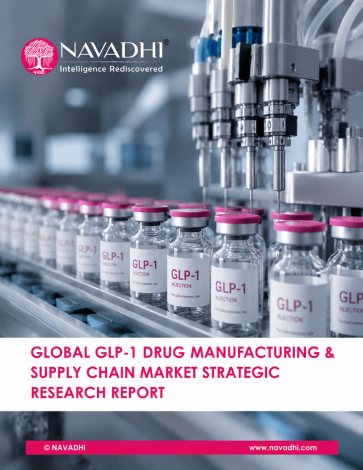
Global GLP-1 Drug Manufacturing & Supply Chain Market Strategic Research Report 2026-2031

Global GLP-1 Drug Manufacturing & Supply Chain Market Strategic Research Report 2026-2031
Publication ID: 
NAV0826012
Publication Date: 
August 24, 2026
Pages: 
240
Countries: 
Global [1]
Please choose the suitable license type from above. More details are at given under tab "Report License Types" below.

The global GLP-1 drug manufacturing and supply chain market continues to expand at an exceptional pace through the 2025–2031 forecast window, defined by a sustained gap between patient demand and available manufacturing capacity -- capacity investment, not demand softness, remains the dominant near-term constraint on market realisation.

Drug Product Formulation and Fill-Finish stands out as the single largest stage of the manufacturing value chain, with API peptide synthesis, delivery device manufacturing, primary packaging, cold chain logistics, and testing/QC/regulatory services rounding out the six core value-chain segments covered.

Competitive coverage spans originator-anchored manufacturing alongside the leading CDMO and packaging partners shaping capacity expansion globally, together with full regional and country-level forecasts across all five major regions, verified company profiles, competitive landscape analysis, Porter's Five Forces, PESTLE, and SWOT analysis, and forward-looking strategic implications through 2031.

Scope of Global GLP-1 Drug Manufacturing & Supply Chain Market Strategic Research Report

  • This report provides forecast data by value (in USD billion) for the global GLP-1 drug manufacturing and supply chain market, with 2025 as the base year and 2022–2025 as the historical period, forecasting to 2031.
  • This report provides segment by type (GLP-1 API Peptide Synthesis (CDMO), Drug Product Formulation and Fill-Finish, Delivery Device Manufacturing, Primary Packaging and Containment, Cold Chain and Temperature-Controlled Logistics, Testing, Quality Control, and Regulatory Services) forecast data by value for the global GLP-1 drug manufacturing market.
  • This report provides application segments across the same six manufacturing value-chain stages, with deeper segment-level definition, market size and growth trajectory, competitive landscape, and forward-looking analysis for each.
  • This report provides region-wise (North America, Europe, Asia Pacific, Middle East & Africa, Latin America) forecast data by value for the global GLP-1 drug manufacturing market.
  • This report also provides country-wise forecast data for the major markets across all five regions.
  • This report identifies key growth drivers and inhibitors (pain points) affecting the global GLP-1 drug manufacturing market.
  • This report provides company profiles including Company Overview, Key Products & Segments, Financial Performance, Business Strategy, and Strategic Implications, along with competitive landscape for 240-page-detailed, verified companies in the global GLP-1 drug manufacturing market.
  • This report provides Porter's Five Forces analysis for the global GLP-1 drug manufacturing market.
  • This report provides PESTLE (Political, Economic, Social, Technological, Legal and Environmental) analysis for the global GLP-1 drug manufacturing market.
  • This report provides SWOT (Strengths, Weaknesses, Opportunities and Threats) analysis for the global GLP-1 drug manufacturing market.
  • This report identifies key future trends in the global GLP-1 drug manufacturing market.

Segment by Type in Global GLP-1 Drug Manufacturing & Supply Chain Market Strategic Research Report

  • GLP-1 API Peptide Synthesis (CDMO)
  • Drug Product Formulation and Fill-Finish
  • Delivery Device Manufacturing
  • Primary Packaging and Containment
  • Cold Chain and Temperature-Controlled Logistics
  • Testing, Quality Control, and Regulatory Services

Segment by Application in Global GLP-1 Drug Manufacturing & Supply Chain Market Strategic Research Report

  • GLP-1 API Peptide Synthesis (CDMO)
  • Drug Product Formulation and Fill-Finish
  • Delivery Device Manufacturing
  • Primary Packaging and Containment
  • Cold Chain and Temperature-Controlled Logistics
  • Testing, Quality Control, and Regulatory Services

Segment by Region in Global GLP-1 Drug Manufacturing & Supply Chain Market Strategic Research Report

  • North America
    • United States
    • Puerto Rico (US)
    • Canada
  • Europe
    • Ireland
    • Switzerland
    • Germany
    • Denmark
    • Belgium
    • Rest of Europe
  • Asia Pacific
    • South Korea
    • China
    • India
    • Japan
    • Rest of Asia Pacific
  • Middle East & Africa
    • Saudi Arabia
    • United Arab Emirates
    • South Africa
    • Egypt
    • Rest of MEA
  • Latin America
    • Brazil
    • Mexico
    • Argentina
    • Colombia
    • Rest of LatAm

Who can use the Global GLP-1 Drug Manufacturing & Supply Chain Market Strategic Research Report?

This research report is ideal for people who wish to gain a thorough understanding of the global GLP-1 drug manufacturing and supply chain market. Some of the intended users for this report are:

  • C-level executives and Company Directors in pharmaceutical manufacturing, CDMO, and supply chain companies
  • Industry consultants and Management consultants
  • Marketing professionals and Business development professionals
  • Investment managers, Financial professionals, and Venture Capitalists
  • Bank Managers, M&A Managers, and Auditors
  • Capacity planning, procurement, and supply chain professionals
  • Portfolio Managers and Equity Research Analysts covering pharmaceutical manufacturing
  • Anyone operating in the GLP-1 manufacturing value chain, from API synthesis through fill-finish and distribution
  1. 1. Executive Summary
    1. 1.1 Market Sizing and Forecast Overview
    2. 1.2 Manufacturing Value Chain Segmentation
    3. 1.3 Regional Manufacturing Distribution
    4. 1.4 Principal Growth Drivers
    5. 1.5 Principal Market Inhibitors
    6. 1.6 Competitive Landscape Overview
    7. 1.7 Strategic Conclusions
  2. Industry Overview & Forecast
    1. 2.1 Market Scale and Historical Trajectory
    2. 2.2 Forecast: 2026–2031 Outlook
    3. 2.3 Value Chain Segmentation
    4. 2.4 Regional Distribution and Growth Dynamics
    5. 2.5 Summary Assessment
  3. Market Segmentation by Type
    1. 3.1 Overview of the GLP-1 Manufacturing Value Chain
    2. 3.2 Drug Product Formulation and Fill-Finish
    3. 3.3 Delivery Device Manufacturing
    4. 3.4 GLP-1 API Peptide Synthesis (CDMO)
    5. 3.5 Primary Packaging and Containment
    6. 3.6 Cold Chain and Temperature-Controlled Logistics
    7. 3.7 Testing, Quality Control, and Regulatory Services
    8. 3.8 Comparative Segment Summary and Share Dynamics
  4. Market Segmentation by Application
    1. 4.1 Overview of the GLP-1 Manufacturing Value Chain
    2. 4.2 Segment 1: GLP-1 API Peptide Synthesis (CDMO)
    3. 4.2.1 Segment Definition and Scope
    4. 4.2.2 Market Size and Growth Trajectory
    5. 4.2.3 Competitive Landscape and Capacity Dynamics
    6. 4.2.4 Strategic Trends and Forward-Looking Analysis
    7. 4.3 Segment 2: Drug Product Formulation and Fill-Finish
    8. 4.3.1 Segment Definition and Scope
    9. 4.3.2 Market Size and Growth Trajectory
    10. 4.3.3 Competitive Landscape and Capacity Dynamics
    11. 4.3.4 Strategic Trends and Forward-Looking Analysis
    12. 4.4 Segment 3: Delivery Device Manufacturing
    13. 4.4.1 Segment Definition and Scope
    14. 4.4.2 Market Size and Growth Trajectory
    15. 4.4.3 Competitive Landscape and Capacity Dynamics
    16. 4.4.4 Strategic Trends and Forward-Looking Analysis
    17. 4.5 Segment 4: Primary Packaging and Containment
    18. 4.5.1 Segment Definition and Scope
    19. 4.5.2 Market Size and Growth Trajectory
    20. 4.5.3 Competitive Landscape and Capacity Dynamics
    21. 4.5.4 Strategic Trends and Forward-Looking Analysis
    22. 4.6 Segment 5: Cold Chain and Temperature-Controlled Logistics
    23. 4.6.1 Segment Definition and Scope
    24. 4.6.2 Market Size and Growth Trajectory
    25. 4.6.3 Competitive Landscape and Capacity Dynamics
    26. 4.6.4 Strategic Trends and Forward-Looking Analysis
    27. 4.7 Segment 6: Testing, Quality Control, and Regulatory Services
    28. 4.7.1 Segment Definition and Scope
    29. 4.7.2 Market Size and Growth Trajectory
    30. 4.7.3 Competitive Landscape and Capacity Dynamics
    31. 4.7.4 Strategic Trends and Forward-Looking Analysis
    32. 4.8 Cross-Segment Integration and Strategic Observations
    33. 4.8.1 Value Chain Concentration and Bottleneck Analysis
    34. 4.8.2 Segment Share Evolution Through 2031
    35. 4.8.3 Capital Investment Signals and their Segmental Implications
  5. Regional Market Forecast
    1. 5.1 North America
    2. 5.2 Europe
    3. 5.3 Asia Pacific
    4. 5.4 Middle East & Africa
    5. 5.5 Latin America
  6. Country-Level Market Forecast
    1. 6.1 North America
    2. 6.1.1 United States
    3. 6.1.2 Puerto Rico (US)
    4. 6.1.3 Canada
    5. 6.2 Europe
    6. 6.2.1 Ireland
    7. 6.2.2 Switzerland
    8. 6.2.3 Germany
    9. 6.2.4 Denmark
    10. 6.2.5 Belgium
    11. 6.2.6 Rest of Europe
    12. 6.3 Asia Pacific
    13. 6.3.1 South Korea
    14. 6.3.2 China
    15. 6.3.3 India
    16. 6.3.4 Japan
    17. 6.3.5 Rest of Asia Pacific
    18. 6.4 Middle East & Africa
    19. 6.4.1 Saudi Arabia
    20. 6.4.2 United Arab Emirates
    21. 6.4.3 South Africa
    22. 6.4.4 Egypt
    23. 6.4.5 Rest of MEA
    24. 6.5 Latin America
    25. 6.5.1 Brazil
    26. 6.5.2 Mexico
    27. 6.5.3 Argentina
    28. 6.5.4 Colombia
    29. 6.5.5 Rest of LatAm
  7. Growth Drivers & Inhibitors
    1. 7.1 Overview
    2. 7.2 Growth Drivers
    3. 7.2.1 Manufacturer-Confirmed Capacity Constraint as the Primary Demand Limiter
    4. 7.2.2 Quantified Reshoring-Driven Capital Investment Wave
    5. 7.2.3 Indication Expansion Systematically Broadening the Addressable Patient Population
    6. 7.3 Market Inhibitors
    7. 7.3.1 Multi-Year Capital Lead Times Creating Demand-Supply Mismatch Risk
    8. 7.3.2 Geopolitical and Export-Control Disruption to Chinese CDMO Capacity
    9. 7.4 Composite Driver-Inhibitor Assessment
  8. Key Company Profiles
    1. 8.1 Eli Lilly and Company
    2. 8.1.1 Company Overview
    3. 8.1.2 Key Products & Segments
    4. 8.1.3 Financial Performance (2023–2025)
    5. 8.1.4 Business Strategy
    6. 8.1.5 SWOT Analysis
    7. 8.1.6 Strategic Implications (2025–2031)
    8. 8.2 Novo Nordisk A/S
    9. 8.2.1 Company Overview
    10. 8.2.2 Key Products & Segments
    11. 8.2.3 Financial Performance (2023–2025)
    12. 8.2.4 Business Strategy
    13. 8.2.5 SWOT Analysis
    14. 8.2.6 Strategic Implications (2025–2031)
    15. 8.3 Novo Holdings (via Catalent)
    16. 8.3.1 Company Overview
    17. 8.3.2 Key Products & Segments
    18. 8.3.3 Financial Performance (2023–2025)
    19. 8.3.4 Business Strategy
    20. 8.3.5 SWOT Analysis
    21. 8.3.6 Strategic Implications (2025–2031)
    22. 8.4 Samsung Biologics
    23. 8.4.1 Company Overview
    24. 8.4.2 Key Products & Segments
    25. 8.4.3 Financial Performance (2023–2025)
    26. 8.4.4 Business Strategy
    27. 8.4.5 SWOT Analysis
    28. 8.4.6 Strategic Implications (2025–2031)
    29. 8.5 Lonza
    30. 8.5.1 Company Overview
    31. 8.5.2 Key Products & Segments
    32. 8.5.3 Financial Performance (2023–2025)
    33. 8.5.4 Business Strategy
    34. 8.5.5 SWOT Analysis
    35. 8.5.6 Strategic Implications (2025–2031)
    36. 8.6 WuXi Biologics
    37. 8.6.1 Company Overview
    38. 8.6.2 Key Products & Segments
    39. 8.6.3 Financial Performance (2023–2025)
    40. 8.6.4 Business Strategy
    41. 8.6.5 SWOT Analysis
    42. 8.6.6 Strategic Implications (2025–2031)
    43. 8.7 Biocon Biologics
    44. 8.7.1 Company Overview
    45. 8.7.2 Key Products & Segments
    46. 8.7.3 Financial Performance (2023–2025)
    47. 8.7.4 Business Strategy
    48. 8.7.5 SWOT Analysis
    49. 8.7.6 Strategic Implications (2025–2031)
  9. Competitive Landscape
    1. 9.1 Competitive Landscape Overview
    2. 9.1.1 Market Structure and Concentration
    3. 9.1.2 Estimated Market Share by Leading Player (2025)
    4. 9.1.3 Herfindahl-Hirschman Index and Concentration Assessment
    5. 9.1.4 Overall Competitive Intensity Rating: Low to Moderate
    6. 9.2 Competitive Intensity Assessment
    7. 9.2.1 Tier Classification and Revenue Positioning
    8. 9.2.2 Tier 1
    9. 9.2.3 Tier 2
    10. 9.2.4 Tier 3
    11. 9.2.5 Barriers to Entry and Exit
    12. 9.3 Key Player Strategies & Positioning
    13. 9.3.1 Strategic Group Positioning Narrative
    14. 9.3.2 M&A and Partnership Activity Summary (2022–Present)
    15. 9.3.3 Differentiation Strategies and Geographic Strongholds
    16. 9.3.4 R&D and Technology Investment Trends
    17. 9.4 Competitive Dynamics & Strategic Outlook
    18. 9.4.1 Emerging Competitive Threats & New Entrant Landscape
    19. 9.4.2 Consolidation vs. Fragmentation Outlook
    20. 9.4.3 Competitive Response Matrix
    21. 9.4.4 Strategic Recommendations for 2025–2031
  10. Porter's Five Forces Analysis
    1. 10.1 Threat of New Entrants
    2. 10.2 Bargaining Power of Buyers
    3. 10.3 Bargaining Power of Suppliers
    4. 10.4 Threat of Substitutes
    5. 10.5 Competitive Rivalry
  11. PESTLE Analysis
    1. 11.1 Overview
    2. 11.2 Political
    3. 11.2.1 Reshoring Policy and Manufacturing Nationalism
    4. 11.2.2 Geopolitical Fragmentation and Chinese CDMO Risk
    5. 11.2.3 Regulatory and Trade Policy Influence on Market Access
    6. 11.3 Economic
    7. 11.3.1 Extraordinary Capital Investment Intensity
    8. 11.3.2 Demand-Supply Mismatch Risk and Pricing Dynamics
    9. 11.3.3 CDMO Consolidation Economics
    10. 11.4 Sociocultural
    11. 11.4.1 The Obesity and Metabolic Disease Burden as Market Foundation
    12. 11.4.2 Patient Advocacy and Access Equity Pressure
    13. 11.4.3 Workforce and Specialised Talent Dynamics
    14. 11.5 Technological
    15. 11.5.1 Peptide Synthesis and Biologics Manufacturing Complexity
    16. 11.5.2 Delivery Device Technology and Integration Complexity
    17. 11.5.3 Digital Supply Chain and Serialisation Technologies
    18. 11.5.4 Biosimilar and Generic Entry Technology Dynamics
    19. 11.6 Legal
    20. 11.6.1 Regulatory Approval Pathways and Market Exclusivity
    21. 11.6.2 Biosimilar Regulatory Frameworks and Litigation Risk
    22. 11.6.3 Export Controls and Trade Compliance
    23. 11.6.4 Quality Regulatory Compliance and GMP Standards
    24. 11.7 Environmental
    25. 11.7.1 Energy Intensity of Pharmaceutical Manufacturing at Scale
    26. 11.7.2 Cold Chain Logistics and Carbon Footprint
    27. 11.7.3 Waste Generation and Pharmaceutical Environmental Impact
    28. 11.7.4 Site Selection and Environmental Permitting
    29. 11.8 PESTLE Summary Assessment
  12. SWOT Analysis
    1. 12.1 Executive Overview
    2. 12.2 Strengths
    3. 12.2.1 Demand Signal of Unprecedented Clarity and Scale
    4. 12.2.2 Massive and Accelerating Capital Commitments by Market Leaders
    5. 12.2.3 Highly Specialised Technical Barriers to Entry Protecting Incumbents
    6. 12.2.4 Established Regulatory Approval Infrastructure at Key Manufacturing Geographies
    7. 12.2.5 Integrated Value Chain Depth Creating Cross-Segment Capture Opportunities
    8. 12.3 Weaknesses
    9. 12.3.1 Severe Concentrated Supply Risk Within a Small Number of Organisations and Sites
    10. 12.3.2 Cold Chain and Temperature-Controlled Logistics Infrastructure Gaps
    11. 12.3.3 Device Manufacturing Complexity and Component Supply Constraints
    12. 12.3.4 Geopolitical Exposure Through WuXi Biologics and Chinese CDMO Dependency
    13. 12.4 Opportunities
    14. 12.4.1 Biosimilar Entry Window Creating Transformative CDMO Demand Through 2026\u20132031
    15. 12.4.2 Asia-Pacific Manufacturing Share Expansion Driven by South Korea and India
    16. 12.4.3 Pipeline Expansion Beyond Obesity and Diabetes Into Adjacent Cardiovascular, Renal, and Neurological Indications
    17. 12.4.4 Oral GLP-1 Formulations Creating New Formulation and Delivery Manufacturing Segments
    18. 12.4.5 Middle East and Africa Strategic Investment as Regional Manufacturing Hubs Emerge
    19. 12.4.6 Digital Manufacturing, Continuous Processing, and Process Intensification as Efficiency Multipliers
    20. 12.5 Threats
    21. 12.5.1 Regulatory and Political Risk From Drug Pricing Legislation and Import Policy
    22. 12.5.2 Geopolitical Fragmentation Creating Dual Manufacturing System Requirements
    23. 12.5.3 Sustained Capacity Shortfall Damaging Market Trust and Accelerating Biosimilar Entry
    24. 12.5.4 Environmental and Solvent Waste Regulatory Tightening Threatening Synthesis
    25. 12.5.5 Intellectual Property Litigation Risk Creating Biosimilar Entry Uncertainty
    26. 12.5.6 Data Integrity and Quality System Failures at Scale Creating Regulatory Jeopardy
    27. 12.6 Integrated SWOT Assessment and Strategic Implications
  13. Future Trends & Outlook
    1. 13.1 Executive Summary of Forward-Looking Dynamics
    2. 13.2 Market Scale and Trajectory Through 2031
    3. 13.3 Value Chain Evolution: Segment-Level Outlook
    4. 13.3.1 API Peptide Synthesis
    5. 13.3.2 Drug Product Formulation and Fill-Finish
    6. 13.3.3 Delivery Device Manufacturing
    7. 13.3.4 Primary Packaging and Containment
    8. 13.3.5 Cold Chain and Temperature-Controlled Logistics
    9. 13.3.6 Testing, Quality Control, and Regulatory Services
    10. 13.4 Regional Outlook and Geographic Competitive Dynamics
    11. 13.4.1 North America
    12. 13.4.2 Europe
    13. 13.4.3 Asia Pacific
    14. 13.4.4 Middle East, Africa, and Latin America
    15. 13.5 Biosimilar Entry and the Competitive Restructuring of the Supply Chain
    16. 13.6 Technology Trends Reshaping Manufacturing Capability
    17. 13.6.1 Continuous Manufacturing and Process Intensification
    18. 13.6.2 Artificial Intelligence in Quality Control and Supply Chain Management
    19. 13.6.3 Oral Formulation Technology
    20. 13.7 Supply Chain Resilience and Geopolitical Risk Dimensions
    21. 13.7.1 Geographic Concentration Risk
    22. 13.7.2 Geopolitical Fragmentation of CDMO Supply Chains
    23. 13.7.3 Raw Material and Critical Input Security
    24. 13.8 Investment and Capacity Expansion Outlook
    25. 13.9 Regulatory Evolution and Its Manufacturing Implications
    26. 13.10 Scenario Analysis: Upside and Downside Considerations
    27. 13.10.1 Upside Scenario
    28. 13.10.2 Downside Scenario
    29. 13.11 Strategic Imperatives for Market Participants
    30. 13.11.1 For Integrated Innovators
    31. 13.11.2 For CDMOs
    32. 13.11.3 For Biosimilar Developers
    33. 13.11.4 For Investors and Supply Chain Strategists
    34. 13.12 Conclusion

This report includes 84 data exhibits (charts, tables, and figures) covering manufacturing value-chain segmentation, regional/country capacity forecasts, competitive positioning, and company financials.


Eli Lilly and Company, Novo Nordisk A/S, Novo Holdings (via Catalent), Samsung Biologics, Lonza, WuXi Biologics, Biocon Biologics

Single User License (PDF)

  • This license allows for use of a publication by one person.
  • This person may print out a single copy of the publication.
  • This person can include information given in the publication in presentations and internal reports by providing full copyright credit to the publisher.
  • This person cannot share the publication (or any information contained therein) with any other person or persons.
  • Unless a Enterprise License is purchased, a Single User License must be purchased for every person that wishes to use the publication within the same organization.
  • Customers who infringe these license terms are liable for a Enterprise license fee.


Site License (PDF)*

  • This license allows for use of a publication by all users within one corporate location, e.g. a regional office.
  • These users may print out a single copy of the publication.
  • These users can include information given in the publication in presentations and internal reports by providing full copyright credit to the publisher.
  • These users cannot share the publication (or any information contained therein) with any other person or persons outside the corporate location for which the publication is purchased.
  • Unless a Enterprise License is purchased, a Site User License must be purchased for every corporate location by an organization that wishes to use the publication within the same organization.
  • Customers who infringe these license terms are liable for a Enterprise license fee.


Enterprise License (PDF)*

  • This license allows for use of a publication by unlimited users within the purchasing organization e.g. all employees of a single company.
  • Each of these people may use the publication on any computer, and may print out the report, but may not share the publication (or any information contained therein) with any other person or persons outside of the organization.
  • These employees of purchasing organization can include information given in the publication in presentations and internal reports by providing full copyright credit to the publisher.

*If Applicable.

About Us

NAVADHI is a market research company that helps global firms differentiate themselves, break market entry barriers, track their investments, develop business strategies and plan for future by providing actionable market research intelligence that helps them succeed.

Infomation

  • About Us
  • Publications
  • FAQs
  • Privacy Policy
  • Terms & Conditions
  • Careers
  • Press Releases
  • Contact

Source URL:https://www.navadhi.com/publications/global-glp-1-drug-manufacturing-supply-chain-market-strategic-research-report-2026-2031

Links
[1] https://www.navadhi.com/countries/global